353 Middlestone
Way Cuyahoga
Falls, OH 44223 +1 (866)
796-0858
Mobility and seating billing sits at one of the most documentation-heavy intersections the entire DME billing. Every claim carries its own set of K-codes, modifiers, face-to-face requirements, and payer-specific coverage rules. Even if you get one element wrong, the entire claim stalls. At Unify Healthcare Services, we manage the complete billing lifecycle for mobility assistive equipment for all categories. Our team understands the LCD for mobility assistive equipment, the CMS prior authorization program for power mobility devices, and the ATP documentation standards that are demanded in complex rehab claims. Everything is handled from eligibility verification and prior authorization to submission through claim coding, submission, and denial resolution. Whether your patients use manual chairs, power wheelchairs, scooters, or gait trainers, billing for all equipment will be delivered in a clean and compliant manner.
.jpg)


Mobility and seating billing services cover a wider equipment range than most DME categories. There are different billing rules for each subcategory. Manual wheelchair claims require correct K-code selection from K0001 through K0009. It is based on weight class, frame type, and patient functional level. Power wheelchair billing under the K0835–K0864 series demands a valid 7-element order, completed face-to-face examination documentation, and prior authorization approval before delivery. For power operated vehicles and scooters, we confirm that the 3-speed test and functional mobility assessment findings are documented in the clinical notes. Seat lift mechanisms under E0627 and E0628 require a separate letter of medical necessity tied to a qualifying diagnosis. Gait trainers, canes, and crutches are billed with the correct E-codes and modifiers, with proof of delivery maintained for every transaction. Home assessment findings are incorporated into the medical necessity narrative for complex rehab cases wherever it is required as per payer criteria.
Within mobility and seating DME, Wheelchair billing is the highest-scrutinized category. Medicare and commercial payers review wheelchair claims for documentation completeness, functional justification, and prior authorization compliance very aggressively.
We, at Unify RCM, manage wheelchair billing across every complexity level - from standard K0001 manual chairs to the most complex power tilt-in-space and recline systems requiring ATP evaluations. We verify that the face-to-face examination was completed by a qualified treating practitioner within the required six-month window before the written order was issued.
The physician's documentation must demonstrate that the patient has a mobility limitation that significantly impairs their ability to participate in daily activities and that a less costly alternative would not meet their clinical needs. Our team reviews face-to-face notes before submission and flags documentation gaps before a single claim reaches the payer.
.png)
Cost to Collect Reduced by
Client Revenue Increased by
Happy Client
Collection Rate
Wheelchair billing for complex rehab technology is a category where billing errors rarely look like accidents to payers. They look like compliance failures. The K0835–K0864 power wheelchair codes require a level of documentation precision that goes well beyond standard DME billing. An Assistive Technology Professional evaluation is required for complex power seating systems, and the ATP's written findings must support the specific features being billed. We coordinate directly with ATP evaluators, physical therapists, and occupational therapists to ensure their clinical documentation aligns with the billing codes selected. Prior authorization is mandatory for most power mobility device codes under Medicare's PAP program, and submitting without it means denial.
We manage the full prior auth process - including submission, payer follow-up, and tracking authorization expiration dates against delivery timelines. Every complex wheelchair claim we submit is built on a complete, payer-ready documentation package assembled before the equipment ever leaves the supplier.
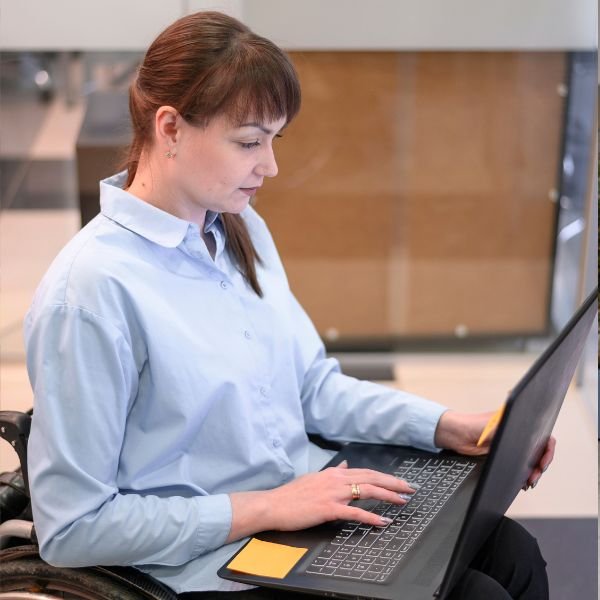

Selecting the right K-code is only the start. Our billers understand the functional criteria, modifier combinations, and LCD documentation requirements behind each mobility code.
The team don’t just wait for documentation to arrive, we work with your ATP evaluators, PTs, and OTs to ensure their clinical findings are captured in a format that satisfies payer requirements.

For power mobility devices, prior auth isn't a one-time task, it has a timeline that must align with delivery and billing.
Mobility Billing compliance does not end at the point of delivery. For rental equipment, monthly billing cycles require active monitoring of authorization status, equipment upgrades, and changes in patient condition that may affect coverage. Unify Healthcare Services manages ongoing documentation requirements for all active mobility accounts - including renewal of written orders, tracking of face-to-face examination currency, and coordination of any required reassessments. When a patient's condition changes and a higher-complexity mobility device becomes clinically necessary, we manage the transition billing, updated prior authorization, and revised documentation package from start to finish. For seat lift mechanisms and POVs billed alongside other mobility equipment, we ensure claim sequencing follows payer rules to avoid bundling rejections.
Home assessment documentation, where required as part of the medical necessity record for complex rehab cases, is maintained with each account file and updated whenever a site visit is conducted by the clinical team.

Below are the specific challenges Unify RCM resolves for mobility DME suppliers every day.
Mobility assistive equipment billing is among the most audited DME categories in the Medicare program. RAC, ZPIC, and MAC auditors regularly target power wheelchair and complex rehab claims because historical error rates in this category remain high across the industry. Unify RCM builds compliance into the front end of every account, not as a reaction to audit notices. Our team monitors the CMS mobility assistive equipment LCD and the prior authorization program requirements for power mobility devices on an ongoing basis. Every patient account is maintained with a complete documentation set - face-to-face examination notes, written orders, prior authorization approvals, ATP evaluation records, proof of delivery, and home assessment findings where applicable. Before any complex rehab claim is submitted, our internal review process checks that the documentation satisfies both the coverage criteria and the specific clinical justification required for the codes being billed. We also conduct pre-audit file reviews for suppliers who want to assess their documentation risk before a review letter arrives.
.png)
The Wrong K-Code Doesn't Just Deny One Claim, It Flags Your Account
Payers track miscoding patterns. A supplier that consistently bills K0004 when clinical documentation supports K0001 is building a denial history that eventually triggers a targeted audit. Coding accuracy in mobility billing protects both your reimbursement and your compliance standing.
A Missing 7-Element Order Makes Prior Authorization Worthless
Power wheelchair claims require a valid 7-element written order before delivery — regardless of whether prior authorization has already been obtained. An approved PA with an incomplete order is still a denied claim. That documentation gap is entirely preventable and entirely avoidable.
ATP Evaluation Findings That Don't Match Billed Features Get Denied Every Time
When the ATP recommends a power tilt system but the written evaluation doesn't explicitly justify the tilt feature against the patient's clinical need, payers deny the add-on code. The equipment was delivered. ATP was paid. The revenue never arrived.

.webp)
Our mission is to take the documentation burden and billing complexity off your team so your mobility DME business gets paid accurately & on time.
We review every mobility claim for correct K-code selection, modifier accuracy, and prior authorization status before submission, so denials from preventable errors stop appearing in your AR reports.
We work directly with your ATP evaluators, physical therapists, and referring physicians to ensure clinical findings are documented in a format that satisfies payer requirements, not just clinical standards.
Our billing audit identifies face-to-face documentation gaps, modifier errors, and missing POD records and we build a structured recovery plan that converts those losses into collected reimbursements.