353 Middlestone
Way Cuyahoga
Falls, OH 44223 +1 (866)
796-0858
Home and accessibility equipment billing occupies a uniquely complex corner of DME revenue cycle management. Unlike standard equipment categories where the product itself drives the coding decision, home and accessibility billing is built almost entirely on the patient's living environment, documented functional limitations, and the clinical justification connecting those two things.
At Unify RCM, we manage home and accessibility equipment billing with a documentation-first workflow that confirms coverage criteria, prior authorization status, and installation compliance records are in place before any claim reaches the payer. We handle every step - from patient intake and home assessment coordination through claim submission, denial resolution, and proper recordkeeping.



Home and accessibility equipment billing services span a range of product categories that each carry their own distinct coverage rules, documentation standards, and payer-specific prior authorization requirements. Minor environmental modification billing covers ramp installations, grab bar placements, widened doorways, and similar structural adaptations made to a patient's home environment to support safe mobility and daily function. Each modification must be tied to a specific diagnosis, supported by a clinical recommendation, and documented with installation confirmation before billing. Seat lift chair billing under E0627 and E0628 is covered only for the motorized lifting mechanism — not the chair itself — and requires a letter of medical necessity from the treating physician confirming a qualifying musculoskeletal or neuromuscular condition. For power mobility home use documentation, we maintain records confirming the equipment is used primarily within the home, as Medicare's coverage criteria explicitly require. Home assessment reports are filed and maintained as supporting documentation for every account where the patient's home environment is a factor in coverage determination. Every claim we submit is built on a complete, payer-ready documentation package.
Home and accessibility equipment billing for minor environmental modifications is a category where the gap between what was installed and what is documented determines whether the claim gets paid. Payers do not reimburse home modifications based on the contractor's invoice. They reimburse based on documented medical necessity and that documentation must connect the patient's specific diagnosis and functional limitation to the specific modification being billed.
At Unify Healthcare Services, we manage minor environmental modification billing with a structured pre-submission review that confirms a qualified clinician has assessed the patient's home environment and produced a written recommendation supporting each modification. We coordinate with occupational therapists, physical therapists, and home health agencies to ensure assessment documentation meets payer requirements before any modification is completed and billed. Installation confirmation records are maintained in every patient file and produced immediately when payers request them during claim review.

Cost to Collect Reduced by
Client Revenue Increased by
Happy Client
Collection Rate
Home and accessibility equipment billing for seat lift mechanisms is frequently misunderstood, and that misunderstanding costs suppliers significant revenue every year. Medicare covers the motorized lifting mechanism only, billed under E0627 for a separate seat lift mechanism or E0628 for a complete lift chair with a covered mechanism. The seat or chair portion is explicitly non-covered. Billing the full unit without separating the mechanism from the non-covered chair component results in either immediate denial or post-payment recoupment. The letter of medical necessity must document a specific qualifying condition, severe arthritis of the hip or knee, or a severe neuromuscular disease, and confirm that the patient requires the lifting mechanism to transition from a seated to a standing position safely.
We maintain home use attestation records, treating physician documentation, and home assessment findings as a unified documentation package for every power mobility account where home environment coverage criteria apply.
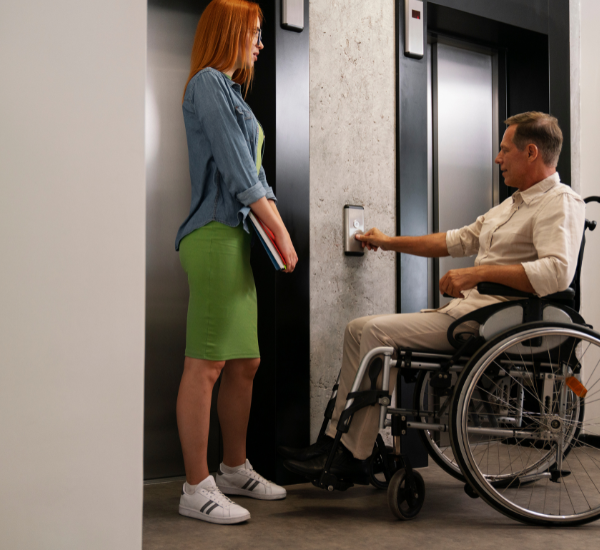
A home assessment that doesn't capture the right clinical language is not billing documentation — it is a site visit report. We work with your occupational therapists and home health clinicians to ensure assessment findings are documented in a format that satisfies payer coverage criteria and supports the specific codes being billed.
For seat lift chairs, environmental modifications, and power mobility home use, we confirm that coverage criteria are met before the equipment is ordered or the modification is scheduled. Catching a coverage gap before delivery costs nothing. Discovering it after billing costs you the claim — and sometimes the equipment.
Home modification and accessibility equipment claims attract post-payment review because documentation failures in this category are common. We maintain installation confirmations, delivery records, and home assessment reports in every patient file — so when a payer requests documentation, the response goes out the same day.
Home and accessibility equipment billing compliance does not end when the modification is installed or the equipment is delivered. Prior authorization approvals have expiration timelines that must align with installation and delivery dates. When those timelines slip — because of contractor scheduling, equipment delays, or clinical changes — the authorization may need to be renewed before billing can proceed. Unify RCM tracks prior authorization expiration dates for every home and accessibility equipment account and alerts your team when delivery timelines are at risk of running past the approved window. For seat lift chair accounts, we monitor treating physician order currency and flag accounts where the letter of medical necessity is approaching its renewal date before the next billing cycle. Power mobility home use documentation is maintained as an active record — not filed once and forgotten — because payers may request it months after the initial claim was paid during a post-payment review. Home assessment reports are stored with each account and updated when a patient's living situation or functional status changes in a way that affects coverage. Our ongoing compliance management means your records are always current and always ready.
.png)
Home and accessibility equipment billing generates denial patterns that repeat themselves across suppliers because the documentation requirements are environmental, clinical, and administrative all at once — and gaps in any one of those three areas are enough to bring a claim down. Below are the specific challenges Unify RCM resolves for home and accessibility equipment billing accounts every day.
.png)
We have built a strong reputation among home modification companies, accessibility equipment suppliers, and DME providers managing complex home environment documentation requirements. Our team brings the billing precision and compliance depth that home and accessibility equipment accounts demand.

.webp)
Our mission is to take the documentation complexity and prior authorization management burden off your team — so your home and accessibility equipment business gets paid accurately, on time, and without audit exposure. Our billing specialists are ready to support you at every step
We review every home and accessibility equipment claim for coverage criteria compliance, medical necessity documentation, and prior authorization status before submission — stopping the preventable denials that erode revenue in this billing category.
We work directly with your occupational therapists, home health clinicians, and installation teams to ensure home assessment reports and installation confirmation records are documented in the format payers require — not just the format that makes sense internally.
Our billing audit identifies seat lift coding errors, missing home assessment reports, expired prior authorizations, and power mobility home use documentation gaps — and we build a structured recovery plan that converts those losses into collected reimbursements.