



















EOB in Medical Billing Explained: Key Insights for Healthcare Providers
The medical billing process comes with many complexities, and even small inefficiencies result in operational disruptions and revenue leakages. Out of all the aspects of billing and coding, one aspect is often overlooked, i.e., the Explanation of Benefits (EOB). An EOB is as crucial as pre-authorization and medical necessity.
It is not merely a statement but an essential financial document that gives billing details about claim processing. It highlights the problematic areas and gives healthcare providers a clear insight into required changes. Understanding EOBs helps healthcare providers ensure billing accuracy, identify denials, and maintain a healthy cash flow.
Because EOBs are very significant for sound medical billing, in this blog, we will talk about what EOBs are, why they matter, common challenges providers face, and how a healthcare provider can ensure effective revenue cycle management.
What Is EOB in Medical Billing?
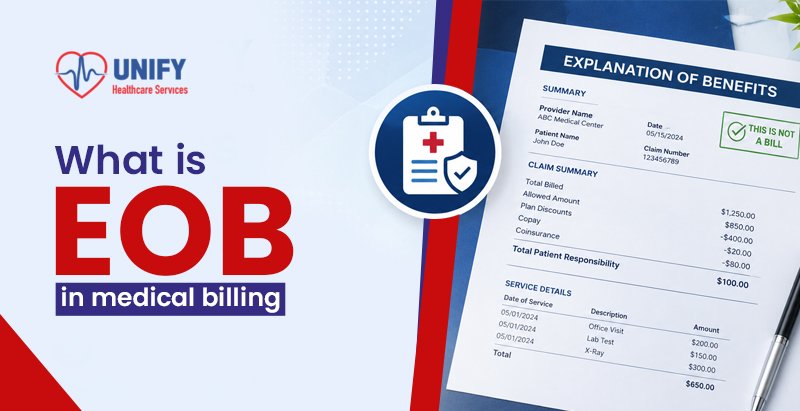
An Explanation of Benefits (EOB) is a statement of processed medical claims, and it is issued by insurance providers. The statement contains every detail about the claim, including its evaluation, approved revenue, and other revenue adjustments.
An EOB acts as a tool for healthcare providers and practitioners to learn about filed claims. It clarifies doubts as if the claim was processed correctly. Did the payer reimburse the correct amount, or are there any services that were denied or underpaid?
For patients, EOB is a mere statement of explanation, but for healthcare providers, it is related to financial validation and revenue realization.
Why Should Healthcare Providers Pay Close Attention to EOBs?
EOBs offer a clear insight into the financial stability of any healthcare practice. Not paying close attention to them can affect the medical revenue cycle management. They can lose thousands without noticing.
Here are some reasons why healthcare providers should focus on EOBs:
Revenue Accuracy
EOBs confirm whether you were paid as per contracted rates.
Denial Identification
They highlight denied or partially paid claims that require follow-up.
Contract Compliance
They help verify whether payers are adhering to negotiated agreements.
Audit Readiness
Proper EOB tracking ensures compliance and reduces audit risks.
Key Insight
Studies show that a significant percentage of claims are either underpaid or denied on the first submission, and an EOB review helps providers understand that.
What Key Components Should Providers Analyze in an EOB?
EOBs are useful only when healthcare providers learn to review them beyond just surface level reading. There are key sections where healthcare providers must analyze various components in the claims.
| Component | Why it Matters for Providers |
| CPT/HCPCS Codes | Ensures correct procedure billing |
| Allowed Amount | Verifies payer contract compliance |
| Paid Amount | Confirms reimbursement accuracy |
| Adjustment Codes | Explains reductions or write-offs |
| Denial Codes | Identifies issues requiring action |
| Patient Responsibility | Impacts patient collections |
Each of these elements directly affects your practice’s financial health.
How Do EOBs Impact Your Revenue Cycle?
EOBs play a crucial role in defining the reimbursement process, and they highly influence payment posting accuracy, accounts receivable (AR) timelines, denial management workflows, and patient billing transparency.
Let’s understand this with the help of an example:
Suppose there is a claim billed at $1,000, but the allowed amount is $700, and the paid amount is only $500, leading to an adjustment amount of $200.
When healthcare providers overlook the difference in billed and allowed amount, they fail to recover reasonable revenue.
What are the Most Common EOB-related Challenges for Providers?
Even though EOBS are crucial for healthcare providers, they pose various challenges that disrupt the operational flow. These issues are:
- Manual processing errors
- Misinterpretation of adjustment codes
- Delayed denial follow-ups
- Lack of standardized workflows
- High administrative burden
Healthcare practices with a high patient volume don’t have the time or expertise to review every EOB in detail. This situation leads to missed revenue opportunities for healthcare providers.
How Can Providers Effectively Manage EOBs?
If healthcare providers and practices learn to manage EOBs, they can prevent revenue loss and improve their financial performance. To manage EOBs effectively, healthcare providers have to follow a structured approach.
Here’s a step-by-step approach for healthcare providers:
Step 1: Standardize EOB review workflows
Healthcare providers should create a consistent process for analyzing every EOB. Having a framework gives clarity about all the different factors of EOB review.
Step 2: Automate payment posting
ERA (Electronic Remittance Advice) is a better way to receive EOBs, as it reduces manual errors and helps in improving the practice management of the practice.
Step 3: Track denial patterns
The most effective way to reduce revenue gaps in EOB is to improve the medical billing process. By detecting patterns and addressing underlying problems such as errors and denials, healthcare providers can achieve adequate revenue.
Step 4: Monitor payer performance
In the longer run, understanding the financial performance of any healthcare practice comes down to monitoring details thoroughly. That’s why healthcare providers must monitor payer performance and compare reimbursements against contracts.
Step 5: Prioritize follow-ups
Following up on EOBs helps healthcare providers decode a lot about claims, denials and payment delays. Focusing on high-value denials and underpayments is fundamental to effective revenue cycle management.
Why do EOB Errors and Denials Happen so Frequently?
There are various reasons behind the frequent occurrence of EOB errors, and they are:
- Missing or incorrect pre-authorizations
- Coding inaccuracies
- Incomplete documentation
- Payer-specific policy changes
- Eligibility verification gaps
Understanding the root causes helps prevent recurring issues and prevent small errors early in the process to avoid big reimbursement losses.
How Can a Medical Billing Company Transform EOB Management?
Let’s be honest, managing EOBs is challenging yet extremely important for every healthcare provider and practice. Most healthcare providers experience inefficient management of EOBs when handled internally.
However, when professionals handle EOBs, healthcare providers and practices can witness proper management and error reduction. Medical billing companies hold the needed expertise to avoid errors and prevent denials.
They offer:
Proactive EOB Auditing
Billing experts offer services that scrutinize every EOB, review them, and identify revenue gaps. They help identify underpayments and resolve inconsistencies in the process. They further use this knowledge to improve your billing process and prevent reimbursement leakages.
Advanced Denial Management
Medical billing services don’t simply write off denied claims, but they analyze every single denial causing factor. They understand issues from the root, appeal for revenue recovery, and reclaim lost reimbursement. All this is possible because they follow advanced denial management.
Faster Payment Posting
Professional billers always stay ahead and utilize proper technical tools to ensure a faster payment posting system. With proper tools in place, healthcare providers experience improved accuracy and reduced turnaround time. They also get real-time visibility into their financial posture.
Contract Optimization
Billing companies compare expected with actual reimbursements and identify payer discrepancies. They then use their findings to optimize reimbursement contracts with insurance payers and improve their collections.
Administrative Burden Reduction
When healthcare providers partner with a medical billing company, they shift the administrative burden to experts. This reduces administrative strain, allowing providers to concentrate on patient care.
What Measurable Impact Can Outsourcing EOB Handling Deliver?
Here’s what providers typically experience:
| Metric | Before Billing Support | After Billing Optimization |
| Claim Denial Rate | High | Significantly Reduced |
| AR Days | 45–60 days | 25–35 days |
| Revenue Leakage | Common | Minimized |
| Staff Workload | Overwhelming | Streamlined |
How Does Better EOB Management Improve Patient Billing?
When EOBs are accurate, they create a scenario with clean patient statements, reduced billing disputes, faster collections, and increased trust among patients.
On the other hand, patients understand their out-of-pocket costs and pay on time. A lot is solved with efficient EOBs, and there is a visible increase in reimbursement.
When Should a Provider Consider Outsourcing EOB Management?
If you have reached this part of the blog, then it is already a sign to choose medical billing outsourcing for EOB management. However, if you are still unclear and need a little more reason to switch, then look at your current medical challenges.
Are you consistently facing:
- Frequent claim denials
- Delayed reimbursements
- High AR days
- Staff burnout
- Revenue inconsistencies
Then it’s time to change your medical billing approach and prevent your healthcare practice from significant financial losses.
Final Thoughts
EOBs are not just routine administrative statements; they are critical financial documents that reflect the true performance of your revenue cycle.
For healthcare providers, the real difference lies in how EOBs are managed. Simply processing them is not enough. Strategic review and consistent management directly determine whether revenue is fully captured or silently lost.
Revenue leakage typically results from process inefficiencies, not a shortage of patients. It happens due to gaps in medical billing accuracy, denial management, and inefficient EOB handling workflows.
Working with specialists in Medical Billing can help you:
- Recover missed and underpaid revenue
- Reduce claim denials and rejections
- Improve cash flow consistency
- Enhance overall operational efficiency
In today’s evolving healthcare environment, effective EOB management is not optional. It is essential for maintaining financial stability and supporting long-term growth.
Frequently Asked Questions
EOBs should be reviewed on a daily or weekly basis depending on claim volume. Regular review ensures that underpayments, denials, and processing errors are identified early, preventing revenue loss and delays in follow-up actions.
An EOB is typically a paper or PDF statement sent by the insurance payer, while an ERA (Electronic Remittance Advice) is its electronic version that can be directly posted into billing systems. ERAs reduce manual work, improve accuracy, and speed up payment posting compared to traditional EOBS.
Yes, underpayments can be corrected if identified within the payer's appeal or correction window. Providers must review the allowed amount and contract terms carefully and submit a reconsideration or appeal request to recover the remaining balance.
When a denial appears on an EOB, providers should first identify the denial code, understand the reason, and determine whether it is correctable. Based on the issue, they may need to resubmit the claim, provide additional documentation, or file an appeal within the payer's timeline.
EOBs directly influence multiple stages of the revenue cycle, including payment posting, accounts receivable management, denial follow-ups, and patient billing. Any inefficiency in reviewing or interpreting EOBs can lead to revenue leakage, increased AR days, and cash flow disruptions.
Medical billing companies help streamline EOB management by conducting detailed audits, improving denial management processes, ensuring accurate payment posting, and monitoring payer compliance. This structured approach helps healthcare providers reduce administrative burden, improve accuracy, and maximize revenue recovery.