



















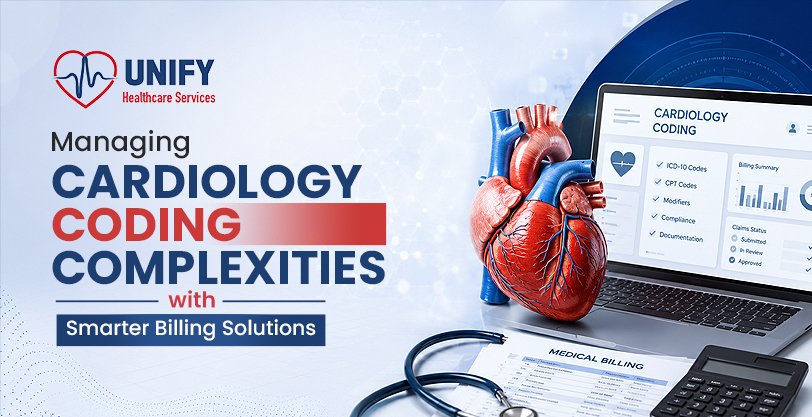
The Hidden Cost of Cardiology Coding Errors and How to Fix Them
Cardiology coding is not about translating medical records into CPT codes. It’s about truly understanding billing for cardiovascular medicine as a specialty and protecting revenue through effective strategy. When cardiologists evaluate a medical billing company, they look for cardiology billing services that go beyond offering basic coding.
Managing cardiology coding is about ensuring expertise and specialty knowledge. The billing process must keep evolving, include the latest coding trends, and maintain accuracy at all times.
Industry reports indicate that cardiology practices experience denial rates ranging from 10% to 20%, with coding errors and documentation issues among the leading causes of claim rejections. Additionally, coding-related mistakes account for up to 32% of healthcare claim denials, creating significant revenue loss.
Why Do Healthcare Providers Find Cardiology Coding Difficult?
Cardiology is a layered medical specialty, and that makes the coding part difficult for healthcare providers. Effective cardiology coding specifically needs a detailed understanding of various cardiology procedures.
- Cardiovascular anatomy and physiology
- Diagnostic testing procedures
- Coronary interventions
- Electrophysiology studies
- Implantable cardiac devices
- Structural heart procedures
- Medicare and commercial payer guidelines
While cardiologists are experts at treating patients and offering the best care, the coding part is out of their expertise. Even a single patient may need treatment including multiple procedures, and this translates into the coding step.
Coding begins with analyzing doctor notes (documentation), selecting proper codes for the rendered care, and ensuring bundling compliance. DISCLAIMER – this is not an easy process and requires deep understanding, expertise, and skill.
The Common Challenges Faced by Cardiologists
- Quickly evolving CPT codes for cardiology
- Extensive documentation requirements
- Complex modifier usage
- National Correct Coding Initiative (NCCI) edits
- Medical necessity validation
- Multiple procedure reductions
- Payer-specific reimbursement policies
What are the Cardiology Coding Challenges that Go Unnoticed?
| Cardiology Coding Area | Hidden Challenge |
| Evaluation and Management (E/M) Documentation | Incomplete notes can lead to under-coding or denials. |
| Echocardiography Coding Complexity | Difficulty in selecting correct study type affects accuracy. |
| Stress Testing and Diagnostic Cardiology Services | Missing components can result in reduced reimbursement. |
| Cardiac Catheterization Coding | Complex procedures and bundling increase coding errors. |
| Coronary Intervention Coding | Improper modifiers or unclear documentation cause rejections. |
| Electrophysiology (EP) Coding Challenges | Multi-layered coding leads to missed or duplicate entries. |
| Cardiac Device Billing | Strict rules make errors more likely and costly. |
| Structural Heart Procedure Coding | Multiple CPT codes require highly precise documentation. |
What is the Financial Impact of Coding Errors in Cardiology?
In cardiology, coding errors and missing details affect the financial performance of the practice. For every cardiology practice, there is a need for seamlessly flowing revenue to support medical care for countless people. Robust revenue cycle management allows healthcare providers to keep offering their quality care to patients.
Rise in Claim Denials
When coding errors become common in cardiology billing, they lead to an increase in claim denials. And obviously denials mean disrupted cash flow and delayed reimbursement. There are various reasons behind denials such as missing documentation, incorrect diagnosis, invalid usage of modifiers, and more.
Delays in Reimbursement
Delays in reimbursement can be normal in administrative processes. But it becomes a serious issue when revenue stays blocked for weeks or months. Denied claims require identification of errors and recovery, but when that doesn’t happen, reimbursement delays increase.
Revenue Leakage
When the topic is coding, revenue leakage also happens due to under-coding and missed billable services. Mostly, healthcare providers focus on getting the codes right and miss equally damaging outcomes of under- and over-coding.
Higher Compliance Risk
Coding comes in a package and gets affected by compliance risks caused by improper coding. There are high chances of insurance payer audits, regulatory investigations, and overpayment recovery.
Why Do Cardiology Claims Get Denied by Insurance Payers?
It’s important to understand the importance of coding accuracy and efficiency. This is the right way for healthcare providers to improve their medical billing process and prevent coding errors.
However, it is extremely crucial to understand why claims are rejected by insurance payers. This gives perspective and allows healthcare providers to make better strategies for their billing and coding process.
The most frequent reasons behind claim denials:
Inadequate Documentation
At the time of claim processing, insurance payers check clinical documentation of billed services. Missing data, incomplete physician notes, or medical necessity in documentation can trigger payers to deny claims.
Diagnosis and Procedure Mismatches
Diagnosis and procedure codes must justify the performed procedures. The lack of such codes or mismatch between them can lead to claim denials. Payers check if ICD-10 diagnosis codes and CPT procedure codes are mentioned accurately.
Lack of Medical Necessity
There is a limited buzz around medical necessity, but it is as crucial as matching procedures and diagnosis codes. Some procedures need medical necessity, and if at the time of claim processing there is a lack of it, claims get denied.
Prior Authorization Issues
Similar to medical necessity, prior authorization is a must in certain cardiovascular procedures. There should not be any missing, expired, or poorly documented authorizations to prevent claim rejections and denials.
Coding Errors and Modifier Misuse
The most common reason behind insurance payers denying claims is incorrect CPT codes, improper usage of modifiers, and lack of payer-specific coding guidelines.
Bundling and NCCI Edit Violations
Insurance payers closely monitor claims for services that should be bundled under a single procedure. When healthcare providers bill such services separately, it results in denials and revenue losses.
Duplicate or Conflicting Claims
Duplicate and conflicting claims mean submitting the same claims to multiple providers. This is a violation of payer rules, and it leads to cardiology denials and reimbursement delays.
Eligibility and Coverage Limitations
Cardiology as a specialty is so complex, and it also reflects insurance coverage of patients. Offering medical aid to patients with limited or no coverage for cardiology affects healthcare provider revenue in the later stages of billing.
How Do Smart Billing Solutions Help Cardiologists?
Cardiologists deserve a stress-free administrative process with zero coding complexities and free flow of revenue. If this sounds like a dream to you, then you need smart billing solutions for your billing process.
Physician medical billing services play a critical role in solving coding-related roadblocks and improving the financial performance of cardiologists.
Improve Coding Accuracy
They know the importance of accuracy in billing and coding. To ensure accuracy, they work with qualified people who know about cardiology coding. Their team utilizes technology, stays current with coding guidelines, uses modifiers correctly, and ensures compliance. All in all, maintain coding accuracy.
Reduce Claim Denials
Expert billing services set the standard by using advanced claim scrubbing tools operated by billing professionals. Their approach is so comprehensive; they reduce overall errors and prevent denials.
Optimize Revenue Capture
Charge capture, which is also commonly referred to as documentation, is the foundation of coding. It is vital that medical records are free from missed charges, undercoding, and missing details. Expert coders optimize revenue capture and improve operational flow.
Manage Complex Insurance Requirements
Professional medical billing teams manage complex insurance requirements. They follow all rules and policies set by insurance providers. This is extremely beneficial for healthcare providers who want smooth revenue cycle management.
Provide Actionable Revenue Insights
Medical billing companies go a step ahead and provide actionable revenue insights that are very useful to improve the billing process. They give insights on clean claim rate, denial rate, A/R days, collection rate, reimbursement trends, and payer performance.
Meet Regulatory Compliance
Billing service providers realize the importance of regulations and are aware that they keep changing. Medical billers stay up to date with crucial regulations and make sure they are compliant.
How Is Technology Transforming Cardiology Coding?
Technology is a boon for cardiology billing and coding. Choosing technology to correct your billing workflow means sitting on an express train. Similar to an express train, technology accelerates your coding process. There are some add-on features as well that include reduction in paperwork, less reliance on manual handling, more accuracy due to coding databases, and more.
It also simplifies Electronic Health Records (EHR) integration and helps providers streamline the billing and coding process. Technology enables real-time coding analysis depicting measurable insights of trends, denials, and revenue. Correct usage of cardiology coding tools optimizes reimbursement by accelerating claim processing and maintaining regulatory compliance.
Benefits of Outsourcing Cardiology Medical Billing
Professionals know their way around cardiology coding challenges. They handle complexities with ease and reinforce the idea of skilled and knowledgeable coding. When healthcare providers rely on outsourcing their cardiology billing, they experience:
- Better revenue cycle management with faster claim submission, reduction in common manual errors, and prevention of denials.
- Higher coding accuracy achieved through expert coding skills and utilization of the latest technological tools.
- Reduced administrative burden as your billing partner handles the operational tasks from start to finish.
- Quick denial resolution with proactive management of denied claims and recovery of lost revenue.
- Access to advanced technology that allows EHR integration, data analytics, and proper reporting for better medical billing.
- Improved cash flow with efficient claim management through billing and coding best practices ensured by your outsourcing partner.
Final Thoughts
Cardiology coding is considered one of the most intricate parts of the medical billing process. Its consistently evolving nature and rigorous payer rules and operational requirements turn everyday errors into huge financial losses. Healthcare providers need to handle this situation and work on their cardiology coding to make their revenue cycle management better. For this, they must work on improving their billing process or choose expert support from medical billing services.
Unify Healthcare Services offers advanced cardiology billing solutions to help providers handle these challenges. Our team of coders uses skill and technology to make cardiology coding perfect with no errors and limited denials. We take every step and improve it to maximize your financial outcomes. If you want to overcome cardiology prior authorization delays and make coding the star of your operational workflow, choose our services and climb the revenue ladder without stress.
Frequently Asked Questions
One of the most common mistakes is focusing only on claim submission while neglecting denial management, coding audits, documentation quality, and payer follow-up, all of which directly affect revenue performance.
Yes, for many small and mid-sized practices, outsourcing proves to be more cost-effective because it reduces staffing costs, training expenses, technology investments, and compliance risks.
Specialized billing services improve cash flow, reduce administrative workload, optimize collections, minimize denials, and provide financial insights that allow providers to focus on expanding patient care.
Yes, poor documentation can affect reimbursement even if the correct CPT and ICD-10 codes are assigned. It can result in claim denials, reimbursement reductions, or payer audits because medical necessity cannot be verified.
Cardiology billing involves specialty-specific procedures, diagnostic testing, device implantation, electrophysiology services, and complex documentation requirements. It requires a deeper understanding of cardiovascular services and payer policies than general medical billing.