



















Why Getting Documentation Right Before and After Delivery Makes All the Difference
If there's one thing that consistently trips up DME suppliers and healthcare practices, it's documentation. Not coding errors, billing mistakes, but missing or incomplete paperwork on either side of the delivery.
DME billing operates differently from standard medical billing because every claim depends on two separate sets of documentation. One is completed before the equipment leaves the supplier, and the other after it reaches the patient. Both matter equally, and failing on either side creates denials that are often harder to recover from than people expect.
Also, payers are scrutinizing DME claims more aggressively than ever. Requirements are more specific; audit activity has increased, and the window for fixing documentation gaps after the fact keeps getting narrower. Practices that understand what documentation is required are the ones that protect their revenue and keep denial rates manageable.
In this blog, Unify RCM explains everything you need to know about pre- and post-delivery documentation in DME billing. We will also explain how things typically go wrong and how the right billing support makes the whole process more manageable.
What Is DME Billing Documentation and Why Does It Matter So Much?
DME billing documentation is the complete set of records a supplier must maintain and submit to support a claim for durable medical equipment
Documentation is important in DME billing because insurance companies are not only confirming if the right code was submitted. They also check the following:
- If the equipment is clinically needed before it was ordered
- If the correct authorization was in place
- If the equipment was delivered and acknowledged by the patients.
When documentation doesn't answer all of these questions clearly, the claim gets denied. Because DME denials often involve missing documents rather than coding errors, they can be genuinely difficult to appeal.
What Is Pre-Delivery Documentation and What Does It Include?
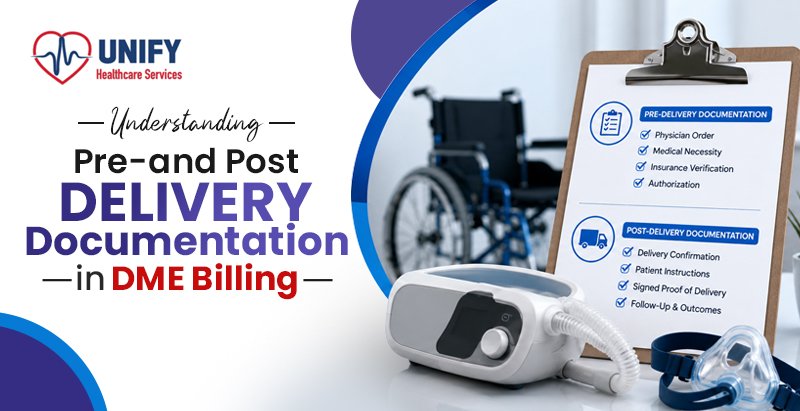
Pre-delivery documentation is everything that needs to be completed before equipment is delivered to a patient.
It establishes medical necessity, confirms eligibility, and ensures if practice receives the right authorizations. If the pre-delivery documentation is incomplete, the claim will be denied regardless of how accurately everything else was handled.
Physician's Written Order
Every DME claim starts with a valid physician's written order. It needs to include the patient's name, the specific equipment being ordered, the physician's name and NPI, the date of the order, and the physician's signature. It also needs to be in place before delivery, not after.
An order that's unclear about the equipment type or signed after the delivery date creates a documentation gap that is difficult to close later. Payers expect orders that reflect the specific clinical need and the specific equipment being provided.
Certificate of Medical Necessity
The Certificate of Medical Necessity documents the clinical justification for the equipment. This simply means why this patient needs this specific piece of equipment. CMN must align with the diagnosis codes on the claim and be signed by the ordering physician.
Its requirements also vary by equipment type and payer, which is where errors happen most frequently. What's acceptable for one payer may be missing required elements for another.
Insurance Eligibility Verification
Verifying coverage before delivery sounds basic, but it's one of the areas where pre-delivery documentation most often falls short. Coverage needs to be confirmed for the specific equipment being ordered, not just general active coverage.
Some equipment types are covered only under specific circumstances or after deductible thresholds are met. Finding coverage issues after the equipment is already in the patient's home creates a situation nobody planned for.
Prior Authorization
Many payers require prior authorization for specific DME categories. These include power wheelchairs, oxygen equipment, complex rehabilitation technology, and certain prosthetics and orthotics.
Authorization must be obtained before delivery, not after. A claim submitted for equipment delivered before authorization was granted will be denied, and in most cases, that denial isn't recoverable through appeal.
Tracking which equipment requires authorization from which payers and getting it confirmed before scheduling delivery is one of the more demanding parts of managing DME billing operations.
What Is Post-Delivery Documentation and What Does It Include?
Post-delivery documentation ensures that all paperwork is completed after the equipment reaches the patient.
It confirms that the equipment was delivered to the patient, the right equipment was delivered, and the patient received it and understood how to use it.
Proof of Delivery
Proof of delivery is the most fundamental post-delivery document. It needs to include the patient's name, the delivery date, a description of the equipment with serial or lot numbers where applicable, and the patient's signature acknowledging receipt.
Claims without adequate proof of delivery are denied at high rates, and appeals are difficult because the missing documentation reflects something that may not have been properly recorded at the time of delivery.
Delivery and Setup Documentation
For more complex equipment, documentation needs to go beyond a basic delivery receipt. It should confirm that the equipment was set up correctly and that the patient or their caregivers received instruction on proper use. This serves as both a clinical purpose and a billing purpose simultaneously. It also demonstrates that the service being billed was delivered.
Ongoing Documentation for Rental Equipment
For equipment billed on a rental basis, post-delivery documentation doesn't end at delivery. Payers require regular documentation confirming the patient continues to need and use the equipment. This ongoing requirement is one of the areas where DME billing operations most consistently fall behind, with rental claims continuing without the documentation that justifies continued billing.
What Are the Most Common Documentation Errors in DME Billing?
Incomplete Physician Orders
Orders missing the physician's NPI, lacking specific equipment descriptions, or signed after the delivery date are one of the most consistent denial triggers. A documented review process before delivery is scheduled is what catches these errors.
CMN Errors
Certificates of Medical Necessity with missing sections, incorrect dates, or elements that don't match the diagnosis codes on the claim create denials that require significant documentation to appeal. Equipment-specific checklists help catch CMN issues before submission.
Proof of Delivery Gaps
Delivery receipts with missing patient signatures, lacking complete detail to identify the specific equipment, or completed incorrectly at the point of delivery are a consistent post-delivery denial source.
This is an operational problem and a billing one. The documentation needs to be captured correctly at delivery, not reconstructed afterward.
Authorization Gaps
Delivering equipment before authorization is confirmed or failing to renew authorization when the existing authorization expires, creates denials that are often unrecoverable. Authorization tracking needs to be part of the operational workflow, not just something billing staff manages in isolation.
How Does Proper Documentation Protect Revenue in DME Billing?
When pre-delivery documentation is complete, a claim goes in with medical necessity established, authorization confirmed, and eligibility verified. When post-delivery documentation is complete, the claim confirms the billable event actually occurred.
Claims with complete documentation on both sides pass payer review at significantly higher rates, and the downstream effect is faster reimbursements, less rework, and better cash flow.
This is exactly what increasing your revenue with DME billing services helps practices achieve. The financial performance of a DME operation reflects the quality of its documentation processes more directly than almost any other factor. Also, improving documentation consistency is one of the most reliable ways to improve revenue cycle performance.
What Does Professional Billing Support Do for DME Documentation?
Professional billing supports DME documentation management in the following ways.
- Pre-submission Review: Catches the errors that generate denials before claims go out.
- Authorization Management: Tracks which equipment requires authorization from which payers and ensures renewals happen before expiration.
- Denial Management: Handles the documentation requirements for appeals with the specialist knowledge that increases success rates.
- Ongoing Compliance: Monitoring adjusts documentation processes as payer requirements change.
Unify RCM provides DME billing services built around exactly these requirements. Our services cover pre-delivery documentation review, post-delivery verification, ongoing rental documentation management, and denial handling, all designed to reduce denials, protect revenue, and keep practices compliant.
In Conclusion
Most DME documentation denials are preventable. They come from processes that don't catch missing elements before submission, authorization tracking that doesn't keep pace with delivery schedules, and post-delivery documentation that wasn't captured correctly at the point of service.
Fixing these gaps with the right internal discipline or the right billing support is what turns DME billing from a consistent source of revenue leakage into a reliable part of the practice's financial performance.
Unify RCM helps DME suppliers, and healthcare practices get documentation right from the start. Our specialist knowledge, systematic processes, and ongoing support make a measurable difference in claim outcomes.
Frequently Asked Questions
Pre-delivery documentation establishes medical necessity and authorization before equipment is dispensed. Post-delivery documentation confirms the delivery actually happened. Both are required, and mistakes in either category create denials.
DME requires more documentation than standard billing. These include physician orders, medical necessity certificates, prior authorization, and proof of delivery with patient signatures. Each one has a potential error, and payers audit DME claims more aggressively than most other claim types.
The claim gets denied, and in most cases, that denial isn't recoverable through appeal. Authorization has to be confirmed before delivery, which is why systematic tracking of authorization requirements by payer and equipment type is so important.
Rarely successful. Appeals almost always require the specific documentation that was missing from the original claim. This is why getting documentation right before submission is significantly more efficient than trying to recover revenue after a denial.
By building documentation review into the pre-submission process. Managing authorization tracking. Handling appeal documentation when denials occur. Staying current with payer requirement changes.